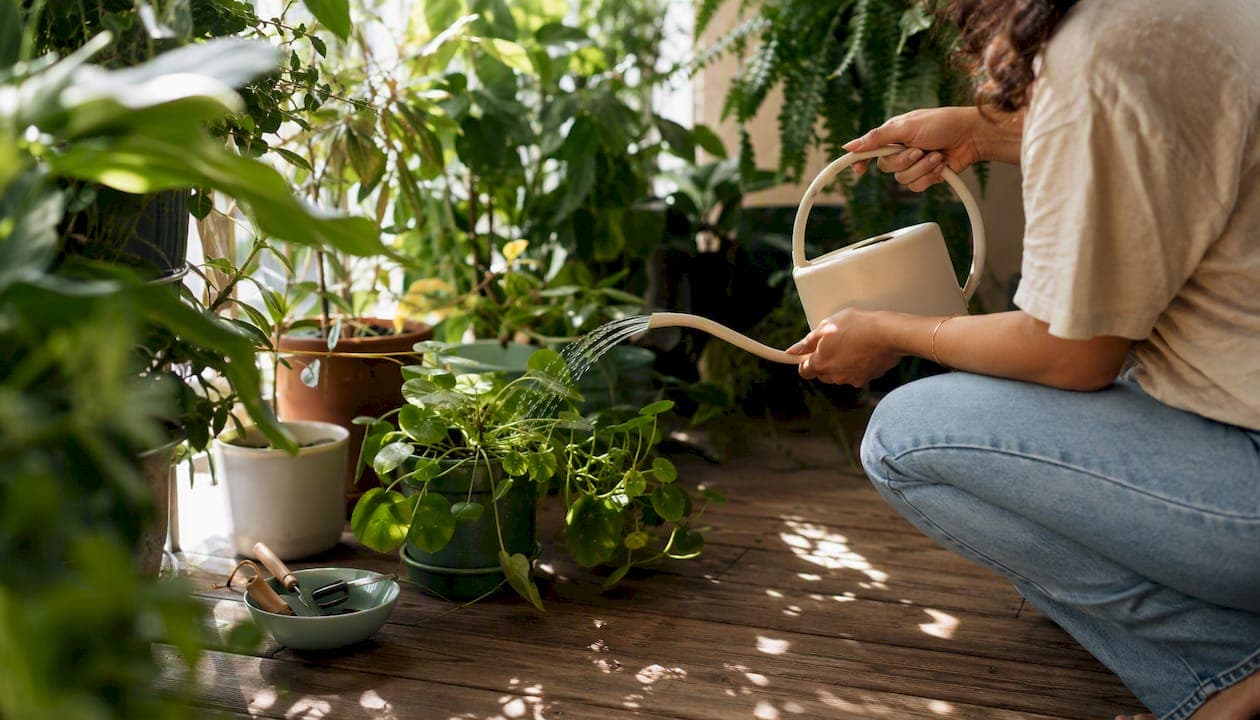
A solid plant care routine looks like this: a quick daily glance, one dedicated weekly "plant day" for moisture checks and rotation, monthly cleaning and feeding during the growing season, and a seasonal reset four times a year. That's it. No complicated spreadsheets, no hourly misting, no guilt.
Here's your copy-and-use weekly checklist to start today:
- Daily (30 seconds): Scan your plants visually. Drooping? Crispy edges? Anything weird? Note it and move on.
- Weekly (plant day): Check soil moisture with your finger, water only what needs it, rotate pots a quarter turn, and do a quick pest scan under leaves.
- Monthly: Wipe leaves, empty saucers, feed with a diluted fertilizer during spring and summer, and check for root crowding.
- Seasonally: Adjust watering frequency, pause fertilizing in late fall, move plants as light shifts, and repot in spring when needed.
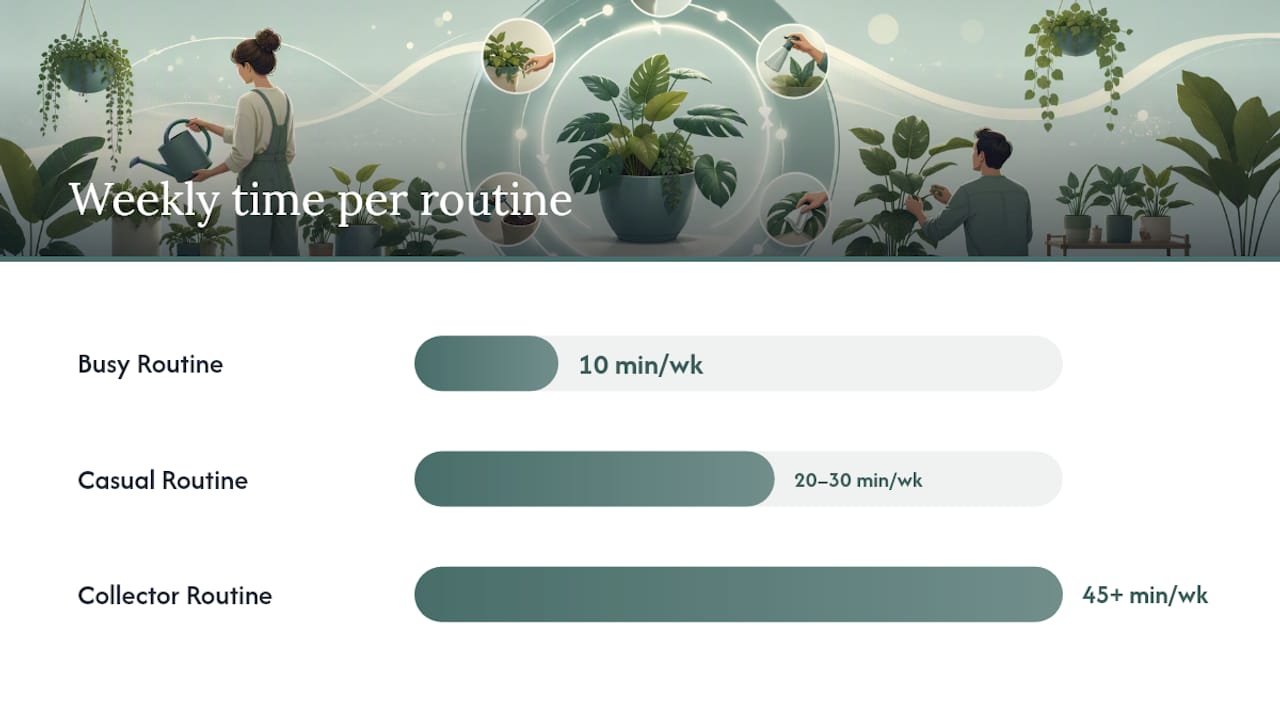
Time budget? If you have 1–3 plants, your weekly plant day takes about 10 minutes. A collection of 4–10 plants runs closer to 20–30 minutes. Anything above 10 plants, budget 45 minutes or more, and you'll probably want an app to keep track. Printable checklists and short routines like this one help owners stick to a schedule and meaningfully reduce plant loss from inconsistent care.
Key Takeaways
A consistent plant care routine built around a weekly "plant day" is the single most effective way to keep houseplants healthy and catch problems before they become emergencies.
| Point | Details |
|---|---|
| Weekly plant day is the core habit | Pick one day per week for moisture checks, rotation, and pest inspection — same day, every week. |
| Check soil before every watering | Stick your finger 2–3 cm into the soil; water only when it's dry at that depth to avoid root rot. |
| Group plants by needs | Cluster plants with similar light and water requirements to simplify your schedule and speed up diagnosis. |
| Seasonal adjustments prevent damage | Stop fertilizing in late fall, reduce watering in winter, and repot in spring when plants are ready to grow. |
| Planthead logs your routine | Use Planthead to set recurring reminders, track watering history, and store plant metadata for your whole collection. |
Table of Contents
- Why a consistent routine saves your plants (and your sanity)
- How to build a plant care routine that actually fits your life
- Watering and soil: how to tell when your plant is actually thirsty
- Matching your plants to the right light spot
- Humidity and temperature: what actually matters for your plants
- Monthly maintenance and seasonal tasks: your full-year schedule
- Common mistakes and how to fix them fast
- Printable checklist and three sample routines you can copy right now
- What the Planthead community taught me about keeping a routine
- Planthead turns your routine into reminders that actually stick
- Sources
Why a consistent routine saves your plants (and your sanity)
Most houseplants don't die from neglect in one dramatic moment. They decline slowly, through a series of small misses: the watering that happened three weeks late, the pest colony that went unnoticed for a month, the root rot that started quietly while you were busy. A simple weekly check-in plus monthly and seasonal tasks creates a repeatable rhythm that prevents most of these common causes of houseplant decline.
The key insight is that consistency beats perfection every time. You don't need to water on a precise schedule or mist at exactly 7 AM. You need to show up regularly enough that problems get caught early, before they spiral.
A short weekly routine that focuses on checking moisture, rotating, and inspecting for pests yields better long-term outcomes than infrequent deep-care sessions. Occasional marathon care sessions can't undo weeks of missed signals. Short, regular checks can.
Two failure modes a routine prevents almost entirely: overwatering after forgetting (you water twice in a panic to compensate, and roots suffocate), and pests spreading across your whole collection because you didn't catch the early signs on one plant. Both are solved by showing up once a week with fresh eyes.
How to build a plant care routine that actually fits your life
The best plant care plan is the one you'll keep. Here's how to build one from scratch, starting with what you already own.
-
Take a quick inventory. Walk around your home and list every plant: its name (or best guess), pot size, where it lives, when you last repotted it, and what light it gets. This sounds tedious, but it takes about 15 minutes and pays off every time something goes wrong. Grouping plants by water and light needs and keeping a simple inventory reduces mistakes and speeds up diagnosis when problems appear. If you're not sure what a plant is, a plant identifier app can close that gap fast.
-
Group plants by needs. Cluster your thirsty tropicals together, your drought-tolerant succulents together, and your low-light lovers in their own corner. When your groups live near each other, watering becomes a sweep rather than a puzzle.
-
Pick a weekly "plant day." Saturday morning, Sunday evening, Wednesday after work — it doesn't matter which day, only that it's the same one every week. Treat it like a standing appointment. This single habit is the behavioral lever that closes the gap between knowing what to do and actually doing it.
-
Set a realistic time box. Decide in advance how long you're willing to spend. Ten minutes for a small collection, 30 for a medium one. A time box stops plant day from becoming a three-hour rabbit hole (we've all been there).
-
Log it somewhere. A phone calendar reminder, a notebook on the windowsill, or an app all work. The format matters less than the habit. Start with the plants you already own, sort them by light and water needs, and plan a weekly check-in to make care manageable.
Pro Tip: As your collection grows, add new plants to your inventory the same day you bring them home. Five minutes of metadata now (name, pot size, light spot, purchase date) saves hours of guesswork later. An app like Planthead makes this a one-tap habit.
Watering and soil: how to tell when your plant is actually thirsty
Watering is where most plant care routines fall apart, usually because owners water on a calendar instead of checking the soil. The fix is simple: always check before you water.
How to check moisture:
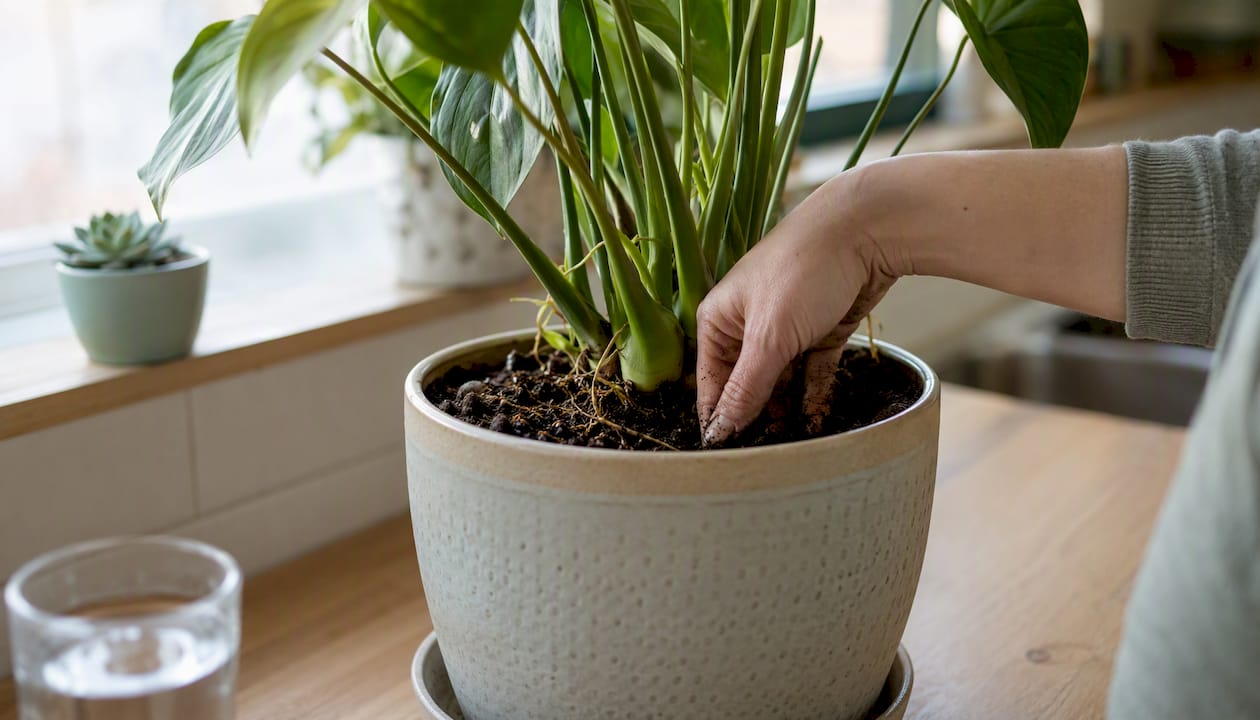
- Stick your finger 2–3 cm (about an inch) into the soil. If it feels damp, wait. If it's dry at that depth, water.
- For a more precise read, a cheap soil probe meter gives a moisture reading in seconds.
- Most tropical houseplants prefer the top 2–3 centimeters of soil to dry out between waterings; succulents need far less frequent water and should feel completely dry several centimeters down before you reach for the watering can.
Watering methods and when to use them:
- Top-watering works for most plants. Pour slowly and evenly until water drains from the bottom.
- Bottom-watering (setting the pot in a tray of water for 20–30 minutes) works well for plants prone to crown rot, like African violets, or for very dry soil that repels water from the top.
- Soak-and-drain is the go-to for succulents and cacti: water thoroughly, then let the pot drain completely before returning it to its spot.
This flushes salt buildup and confirms the root zone is actually getting wet, not just the top inch.
Soil basics matter too. Standard potting mix works for most tropicals, but it compacts over time and starts to repel water. Signs your mix is exhausted: water runs straight through without absorbing, or the soil pulls away from the pot edges. When that happens, it's repotting time. Checking soil before watering is one of the most important beginner habits for avoiding overwatering.
Pro Tip: Before a trip, water thoroughly and group plants together. The shared humidity slows moisture loss. For trips longer than two weeks, a self-watering insert or a friend with your inventory list is a smarter solution than hoping for the best.
Matching your plants to the right light spot
Light is the one thing you can't fake. A plant in the wrong spot will survive for a while, then slowly give up. Getting placement right is the single highest-leverage move in any indoor plant care guide.
Here's what the common light labels actually mean in a real home:
- Bright indirect light: Within 1–2 meters of a south- or west-facing window, but not in the direct sun beam. Think the bright side of a room, not the windowsill itself. Most popular tropicals (pothos, monsteras, philodendrons) thrive here.
- Medium light: 2–3 meters from a window, or near a north- or east-facing window. Snake plants and ZZ plants handle this well.
- Low light: The back of a room or a north-facing corner. Very few plants genuinely thrive here; "tolerates low light" usually means "survives but won't grow much."
- Direct light: On the windowsill in full sun. Cacti, succulents, and some herbs love it. Most tropicals will scorch.
Practical placement checklist:
- Check which direction your windows face before buying a new plant.
- Watch for shadows: a large piece of furniture or a neighboring building can cut available light dramatically.
- Rotate plants a quarter turn each week so all sides get even exposure and the plant grows upright instead of leaning.
- Group light-lovers near your brightest windows and shade-tolerant plants further back.
- If your home is genuinely dark, a simple grow light on a timer (12–14 hours on, 10–12 off) can make a real difference for tropicals.
For ideas on arranging a plant corner that actually works, the indoor jungle oasis guide covers practical layouts and habit-friendly setups.
Humidity and temperature: what actually matters for your plants
Good news: most homes are already in a comfortable range for the majority of houseplants. The drama around humidity is real, but it's mostly relevant for a specific group of plants.
Who cares most about humidity:
- Calatheas, ferns, and many aroids (like anthuriums) prefer relative humidity (RH) in the 40–60% range.
- Most pothos, snake plants, ZZ plants, and succulents are unfazed by typical indoor air at 30–50% RH.
- If your calathea's leaf edges are browning and curling, low humidity is a likely culprit.
Temperature basics:
- Most houseplants are comfortable between 60–80°F (15–27°C), which covers most heated or air-conditioned homes.
- Watch for cold drafts near single-pane windows in winter. A plant sitting against a cold window can experience temperatures well below what the room thermostat reads.
- Keep plants away from heating vents and air conditioning units. Blasts of hot or cold dry air stress plants faster than almost anything else.
Quick do/don't list:
- Do: Group humidity-lovers together near a bathroom or kitchen, where ambient moisture is naturally higher.
- Do: Use a pebble tray filled with water under pots (the evaporation adds gentle humidity without soaking roots).
- Do: Run a small humidifier near your tropical corner if you live somewhere with very dry winters.
- Don't: Mist leaves as a humidity strategy. It raises humidity for about 20 minutes, then evaporates, and wet foliage left overnight invites fungal issues.
- Don't: Panic about humidity if your plants are mostly low-maintenance varieties.
Pro Tip: Bathrooms with natural light are genuinely great spots for ferns and calatheas. The steam from showers provides a passive humidity boost that costs you nothing.
Monthly maintenance and seasonal tasks: your full-year schedule
Think of monthly and seasonal tasks as the deeper layer of your plant care routine. Weekly checks keep plants alive; these tasks keep them thriving.
Monthly maintenance checklist:
- Wipe leaves with a damp cloth to remove dust (dusty leaves photosynthesize less efficiently).
- Empty saucers so roots aren't sitting in standing water.
- Do a thorough pest inspection under leaves and along stems.
- Fertilize with a balanced liquid fertilizer at half strength during the growing season (roughly spring through early fall).
Fertilizing schedule:
- Growing season (spring through summer): feed every 2–4 weeks at half the recommended dose. Half-strength is a widely used guideline because it reduces the risk of fertilizer burn, especially for plants in smaller pots.
- Late fall and winter: stop fertilizing. Plants in lower light and cooler temperatures slow their metabolism, and feeding a dormant plant pushes weak, leggy growth.
Repotting signals and steps:
- Roots circling the bottom of the pot or poking out of drainage holes.
- Water running straight through without absorbing (compacted soil).
- Plant visibly too large for its pot, tipping over, or growing very slowly despite good care.
When those signs appear, spring is the best time to repot: choose a pot 2–5 cm wider than the current one, use fresh potting mix, and water lightly after repotting. Hold off on fertilizing for 4–6 weeks to let roots settle.
Seasonal adjustments (Northern Hemisphere baseline):
- Spring: Resume fertilizing, increase watering frequency as light improves, check for root crowding, and start propagating cuttings.
- Summer: Peak growing season. Water more frequently, watch for pests (warm weather accelerates their cycles), and move sun-lovers to brighter spots.
- Fall: Taper watering and feeding as days shorten. Stopping fertilizing in late fall and reducing water in winter follows plant metabolic cycles and helps prevent common damage.
- Winter: Minimal water, no fertilizer, keep plants away from cold windows, and resist the urge to repot.
Common mistakes and how to fix them fast
Most plant problems follow a short list of causes. Here's how to diagnose and act quickly.
Troubleshooting flow: symptoms → cause → action
- Yellow leaves (lower, older leaves): Often overwatering or natural aging. Check soil moisture. If soggy, let dry out fully before watering again.
- Yellow leaves (all over, new growth too): Could be underwatering, low light, or nutrient deficiency. Check soil, then light, then consider a diluted feed.
- Brown, crispy leaf tips: Low humidity, underwatering, or fertilizer salt buildup. Flush soil with water, increase humidity, or move away from a vent.
- Drooping despite moist soil: Root rot. Unpot, inspect roots, cut any black or mushy ones, repot in fresh dry mix, and hold off watering for a week.
- Leggy, pale growth: Not enough light. Move closer to a window or add a grow light.
Pest triage:
- Quarantine any new plant for 2 weeks before placing it near your collection. This single habit prevents most infestations.
- Inspect under leaves and along stems weekly. Early-stage pests (a few fungus gnats, a small spider mite cluster) are easy to handle. A colony is not.
- First-line treatments: neem oil spray, insecticidal soap, or simply wiping leaves with a damp cloth for soft-bodied pests like aphids.
- For fungus gnats, let the top layer of soil dry out completely between waterings. The larvae need moist soil to survive.
The most common reason plants die is overwatering, not underwatering. When in doubt, wait another day and check the soil again. A slightly underwatered plant bounces back quickly. One with root rot is a much harder rescue.
For more unusual plant behaviors and early warning signs worth knowing, the 10 uncommon things houseplants do guide covers signals most owners miss entirely.
Printable checklist and three sample routines you can copy right now
A routine only works if it's written down somewhere you'll actually see it. Here are three ready-made plant care schedule templates, plus a printable checklist structure you can adapt.
Your printable one-page checklist:
Weekly:
- Moisture check (finger test) on every plant
- Water only what needs it
- Rotate pots a quarter turn
- Pest scan (under leaves, along stems)
- Note anything unusual
Monthly:
- Wipe leaves
- Empty saucers
- Fertilize (growing season only, half strength)
- Check for root crowding
Seasonally:
- Adjust watering frequency
- Pause or resume fertilizing
- Move plants as light changes
- Repot in spring if needed
Three sample routines:
The Busy Routine (10 min/week) Best for: 1–5 low-maintenance plants (pothos, snake plants, ZZ plants, succulents). One plant day per week. Moisture check, water if needed, quick pest glance. Monthly: wipe leaves and empty saucers. No fertilizing in winter. These are the easy plants that genuinely tolerate neglect and fit a minimal schedule perfectly.
The Casual Routine (20–30 min/week) Best for: 5–15 mixed plants including some tropicals. Weekly plant day covers moisture checks, rotation, and a closer pest inspection. Monthly fertilizing in season. Seasonal repotting and light adjustments. A simple notebook or phone reminder keeps this on track.
The Collector Routine (45+ min/week) Best for: 15+ plants, including calatheas, aroids, flowering houseplants, and propagation projects. Weekly plant day is a full sweep: moisture, rotation, pest check, humidity check, and growth notes. Monthly: fertilize, clean, inspect roots of any struggling plants. Seasonal: full repotting review, propagation planning, and light reorganization. At this scale, growing from a few plants to a full urban jungle requires a system, not just good intentions.
Adaptation notes by plant type:
- Succulents and cacti: Water every 2–4 weeks in summer, monthly or less in winter. Skip the humidity tips entirely.
- Tropical foliage plants: Follow the standard routine. Prioritize humidity and consistent moisture checks.
- Flowering houseplants (orchids, peace lilies, anthuriums): Add a bloom-specific fertilizer during flowering. Deadhead spent blooms. Watch for root crowding more frequently.
To convert any of these into calendar reminders, set a recurring weekly event on your phone for plant day, a monthly reminder for cleaning and feeding, and four seasonal reminders (one per season) for the bigger tasks.
What the Planthead community taught me about keeping a routine
Adopting a weekly plant day sounds simple, and it is, but it took me a few failed attempts to make it stick. The turning point wasn't buying better soil or finding the perfect fertilizer. It was treating plant day like a non-negotiable appointment rather than something I'd get to "when I had time."
The Planthead community reflects this pattern constantly. The small wins that show up most often aren't dramatic rescues or rare plant acquisitions. They're things like: "I finally switched to a weekly check instead of watering on a schedule, and I haven't lost a plant in three months." Or: "I started quarantining new plants before adding them to my shelf, and I haven't had a pest outbreak since."
One habit that comes up repeatedly is the value of documenting simple metadata for each plant: location, pot size, last watered, last repot date. It's a small time investment that makes troubleshooting and handing off care dramatically easier, especially as a collection grows past the point where you can hold all the details in your head.
The social side of plant care matters more than most people expect, too. Sharing a small win, getting a tip from someone who's kept the same species for years, celebrating a new leaf on a plant that struggled for months — these moments make the routine feel like something worth keeping, not a chore to endure.
Planthead turns your routine into reminders that actually stick
You've got the routine. Now the question is: where does it live so you actually follow it?
Planthead is built exactly for this. Add each plant to your collection with its name, photo, pot size, and light spot. Set recurring watering and care reminders that match the routine you just built. Log growth milestones, repotting dates, and notes so your plant history is always one tap away. When something goes wrong, your records tell you exactly when you last watered, what soil you used, and how long it's been since the last repot.

The app's shelf system lets you group plants by room or care need, which mirrors the grouping strategy from the build-your-routine section. The free tier covers a small collection; premium unlocks unlimited plants, shelves, and full identification features. No ads, no tracking, just your plants and their history. Walk through the full setup in the how to use Planthead guide, then Planthead and convert today's checklist into your first set of reminders.
Sources
- Houseplant Care Schedule: Weekly, Monthly, Seasonal Tasks | Care Basics Guide | Better Indoor Houseplants
- The Indoor Plant Caretaker's Guide | Household Plant Care Blog
- House Plant Care Calendar: Your Month-by-Month Guide to Healthy Indoor
- Houseplant Care: 12 Tips for Healthy Indoor Plants
- Houseplant Care Tips for Beginners, + printable guide