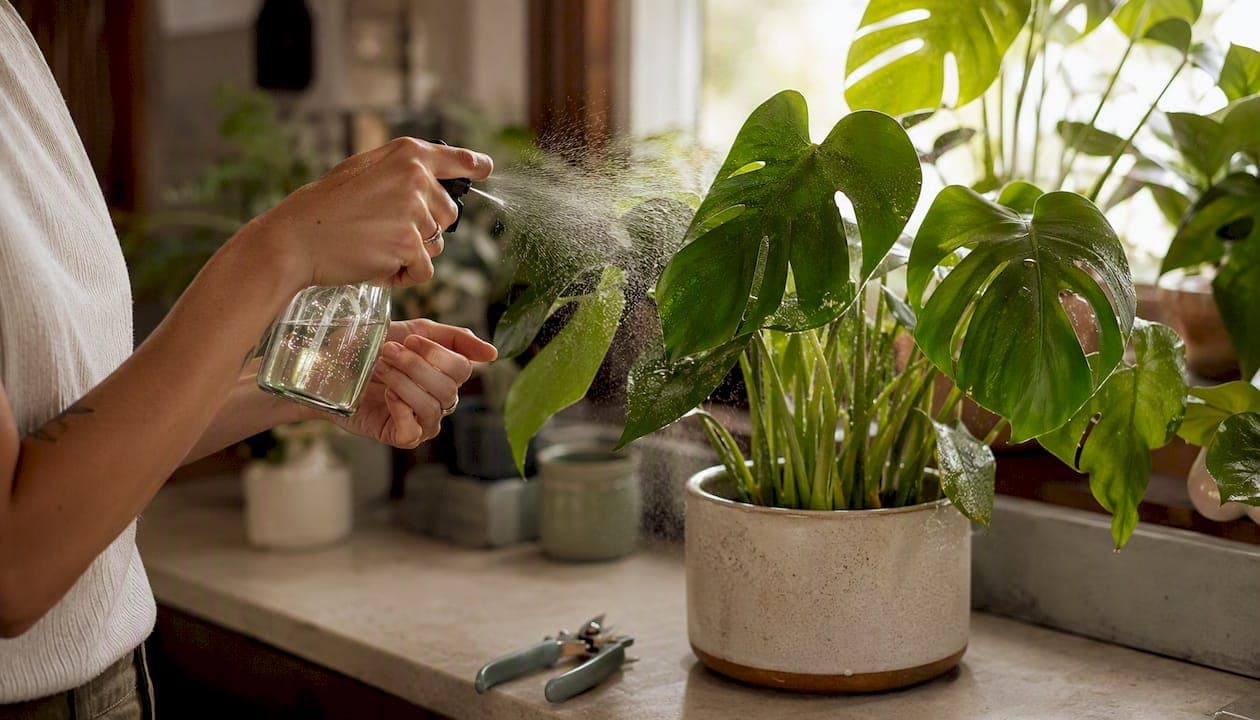
Water when the root zone needs it, not when the calendar says so. Morning is usually the best time to water plants, ideally within 1–3 hours after sunrise, according to University of Minnesota Extension guidance. Early watering keeps evaporation low, lets foliage dry before nightfall, and cuts the disease risk that comes with wet leaves sitting overnight. Evening works as a second choice only if you're confident the leaves and soil surface will dry before dark.
The Morton Arboretum recommends watering deeply so moisture reaches well into the soil to encourage roots to chase water downward rather than loitering near the surface. For established garden beds, the general guideline is to provide adequate water each week from rain plus irrigation combined.
- Water in the morning (1–3 hours after sunrise) whenever possible.
- Evening is acceptable.
- Midday is usually wasteful.
- Deep, infrequent watering beats frequent shallow sprinkles every time.
- Soil checks, not schedules, are your most reliable signal.
Pro Tip: Before you reach for the watering can, push your finger into the soil up to the first or second knuckle. If it feels dry at that depth, water. If it still feels cool and damp, give it another day. Lift the pot too — a surprisingly light pot almost always means a thirsty plant.
Key Takeaways
Morning watering, soil-first checks, and deep infrequent soaking are the three habits that prevent most watering mistakes for both indoor and outdoor plants.
| Point | Details |
|---|---|
| Best time to water | Early morning (1–3 hours after sunrise) reduces evaporation and disease risk. |
| Use soil checks, not schedules | Water when the top 1–2 inches of soil are dry; lift the pot to confirm. |
| Water deeply and infrequently | Aim for 5–6 inches of penetration for garden plants; 1 inch per week for established beds. |
| Special rules apply | New transplants need regular watering for 1–3 years; succulents need soil to dry deeper before each watering. |
| Planthead helps you stay consistent | Use Planthead's reminders, plant profiles, and photo logs to track soil checks and watering history. |
Table of Contents
- What's the best time of day to water plants?
- How do you know when a plant actually needs water?
- How often and how much should you water?
- Watering techniques that actually reach the root zone
- Special cases: new transplants, containers, succulents, and trees
- Signs of overwatering and what to do right now
- Tools and habits that make watering easier
- How Planthead helps you build a watering routine that sticks
- A soil-first habit changed how I think about plant care
- Planthead keeps your watering routine organized and stress-free
- Sources
What's the best time of day to water plants?
Early morning wins, and it's not even close. The window roughly 1–3 hours after sunrise gives water time to soak into the root zone before the sun cranks up evaporation. Foliage dries quickly in the morning air, which matters because wet leaves sitting through the night are basically a welcome mat for fungal disease.
Late afternoon or early evening is your backup plan. If morning watering genuinely isn't possible, aim for 2–3 hours before sunset so the soil surface and any splashed foliage have time to dry. The risk goes up the later you push it, especially in humid climates where overnight drying is slow.
Midday watering is generally discouraged, mostly because a significant portion of the water evaporates before it reaches roots. That said, if a plant is visibly wilting from heat stress on a scorching afternoon, a targeted drink at the base is better than watching it suffer. Think of it as emergency triage, not routine care.
- Morning (1–3 hours after sunrise): lowest evaporation, leaves dry fast, disease risk minimal.
- Late afternoon/early evening: acceptable if foliage will dry before dark; avoid in humid climates.
- Midday: generally wasteful; reserve for heat-stress emergencies only.
- Heat waves: shift watering even earlier; containers in full sun may benefit from a second, light late-afternoon drink at the base only (no wet foliage overnight).
Pro Tip: If you run an automated drip or soaker system, set the timer for the pre-dawn window, say 4–6 AM. The water soaks in slowly, the sun rises to dry everything out, and you never have to think about it again.
How do you know when a plant actually needs water?
Wilting looks dramatic, but it's actually one of the trickier signals to read. A plant can wilt from too little water or too much, which means visual cues alone can send you in the wrong direction. Combine what you see with what you feel.
The Missouri Botanical Garden recommends two quick checks before watering any houseplant: feel the top layer of soil and lift the pot. A pot that feels surprisingly light is almost always dry at the root zone. A pot that still feels heavy probably has moisture to spare. For outdoor beds, a trowel pushed 1–2 inches into the soil gives you a fast read on what's actually happening below the mulch.
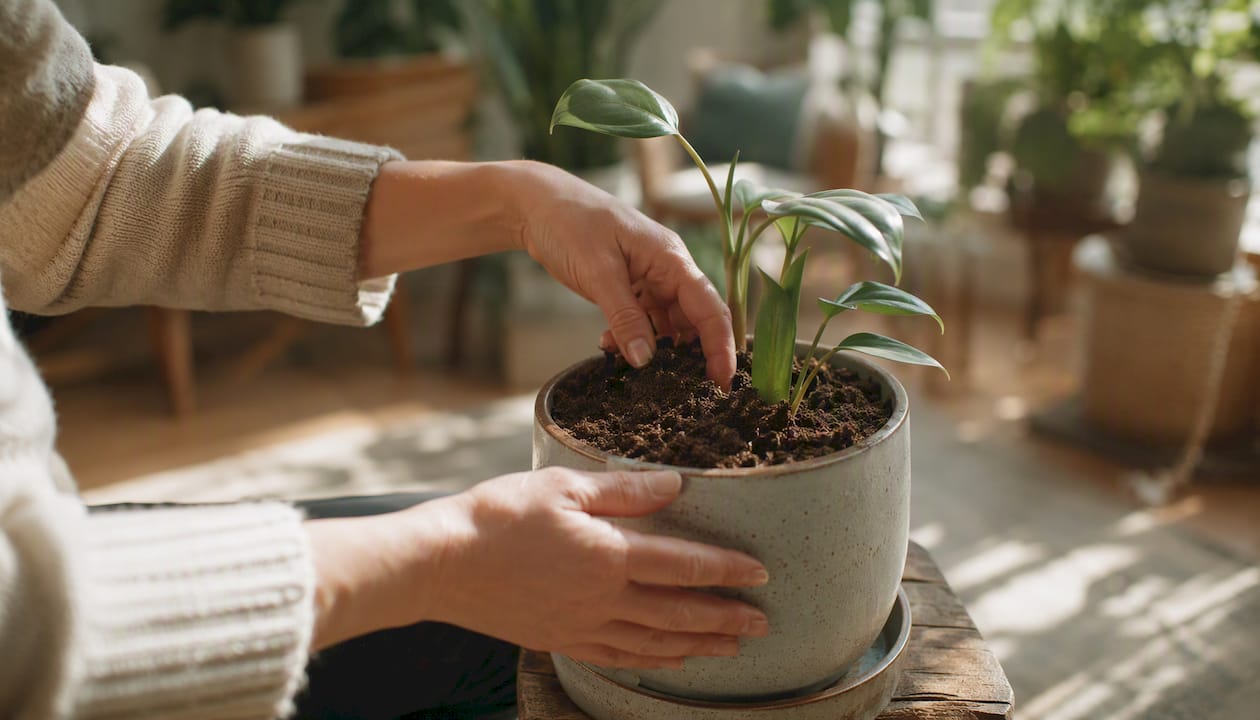
Quick diagnostic: what the symptoms are telling you
| Symptom | Likely cause | Immediate next step |
|---|---|---|
| Wilting + dry, light pot | Underwatering | Water deeply at the base now |
| Wilting + heavy, soggy pot | Overwatering | Stop watering; improve drainage |
| Yellowing lower leaves | Often overwatering | Check soil moisture; let dry out |
| Crispy leaf tips or edges | Underwatering or low humidity | Finger test; water if soil is dry |
| Moldy or musty soil surface | Overwatering | Reduce frequency; improve airflow |
Step-by-step check before you water:
- Look at the plant. Any wilting, yellowing, or crispy edges?
- Push your finger 1–2 inches into the soil. Dry? Time to water. Damp? Wait.
- Lift the pot. Lighter than usual? Water. Still heavy? Check again tomorrow.
- For outdoor beds, probe with a trowel to see if moisture has reached 1–2 inches down.
- Consider the environment: near a heat vent, in direct sun, or in a terracotta pot? All of these dry soil faster than you'd expect.
Room-level conditions shift watering needs more than most people realize. A plant sitting next to a heating vent in January may need water twice as often as the same species sitting in a cool, north-facing corner.
How often and how much should you water?
There's no universal schedule, and anyone who tells you to water every Tuesday regardless of what the soil says is setting you up for trouble. University of Minnesota Extension puts it plainly: water when the top layer of soil feels dry, and aim for periodic watering sufficient for established garden beds, counting both rainfall and irrigation together.
Depth matters more than frequency. RHS research shows that watering less often but more thoroughly encourages roots to grow deeper, which makes plants more resilient during dry spells. Frequent shallow watering does the opposite: roots stay near the surface, where they're vulnerable to heat and drought.
Soil type changes everything:
- Sandy soil: drains fast; may need watering twice a week in warm weather.
- Clay soil: holds moisture longer; once a week is often plenty, but watch for waterlogging.
- Loam: the sweet spot; generally follows the 1 inch/week benchmark well.
To measure 1 inch of water, set a straight-sided container (a tuna can works perfectly) in the garden while you irrigate. When it holds 1 inch of water, you've hit the target. A trowel pushed 5–6 inches into the soil after watering should come out with damp soil clinging to it. If it's dry past 2 inches, you haven't watered deeply enough.
Benchmark to remember: established gardens generally need about 1 inch of water per week from rain plus irrigation, per Martha Stewart's gardening experts. Adjust up for sandy soil, high heat, or containers; adjust down for clay, cool weather, or shade.
Watering techniques that actually reach the root zone
Spraying the leaves and calling it done is the botanical equivalent of eating lunch by smelling someone else's food. The goal is to get water to the root zone, not to decorate the foliage.
For garden beds and trees:
- Water slowly at the base of the plant, not overhead.
- Use soaker hoses or drip irrigation to deliver water directly to the root zone with minimal evaporation.
- For trees, water around the drip line (the outer edge of the canopy), not just at the trunk. That's where the feeder roots actually live.
- Let water soak in slowly rather than running off the surface.
For containers:
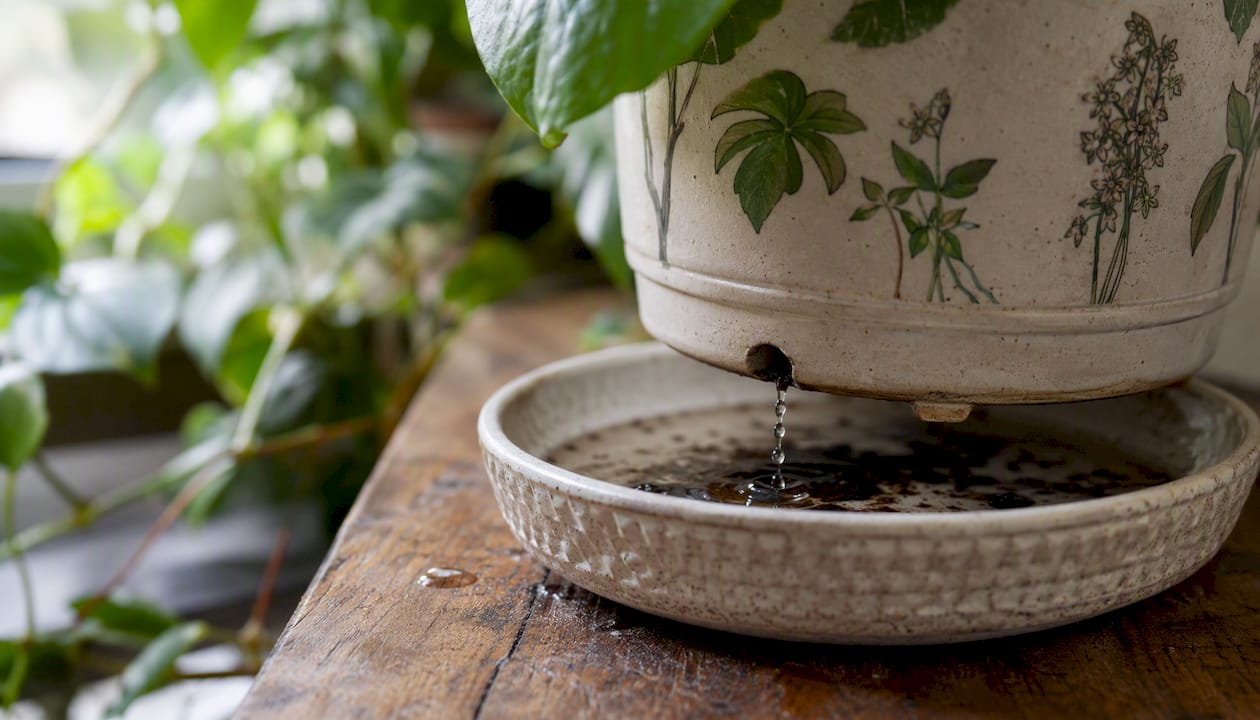
Pour water until it flows freely from the drainage hole. That's your confirmation that moisture has reached the bottom of the root zone. Wait 15–20 minutes, then empty the saucer. Standing water in a saucer is a root-rot invitation, and roots sitting in it will suffocate faster than you'd think. UMN Extension confirms that discarding excess from saucers is a key step most people skip.
Bottom watering (setting the pot in a shallow tray of water and letting the soil wick it up) works beautifully for African violets and other plants that hate wet foliage. For most other species, occasional top-watering is useful to flush accumulated salts from the potting mix.
How to do a proper deep soak in the garden:
- Water slowly at the base using a soaker hose or a watering can with a long spout.
- After 10 minutes, push a trowel 5–6 inches into the soil to check penetration.
- If the soil is still dry below 2–3 inches, keep going.
- Stop when moisture reaches the target depth (5–6 inches for most plants; 12–24 inches for established trees).
- Let the surface dry out before the next watering session.
Pro Tip: A long-spouted watering can lets you direct water precisely at the soil without splashing leaves. For outdoor beds, a soaker hose on a timer set to run in the early morning is one of the lowest-effort upgrades you can make.
Special cases: new transplants, containers, succulents, and trees
The 1 inch/week rule is a solid baseline, but several plant categories play by their own rules.
New transplants and recently planted trees/shrubs: These need the most attention. According to the Morton Arboretum, new plantings typically need regular, deep watering for 1–3 years while roots establish. Water both the root ball and the surrounding soil to encourage roots to spread outward. The Saving Water Partnership notes that large transplants may take even longer to fully establish, so don't ease off too soon.
Containers and hanging baskets: Check daily in hot weather. Small pots can go from moist to bone-dry in a single afternoon. Terracotta pots dry out noticeably faster than plastic or glazed ceramic, so factor in the pot material when you're building a routine. Hanging baskets, exposed to air on all sides, often need water every day in summer.
Succulents and cacti: Let the soil dry deeper between waterings, roughly 1.5–2 inches down or more depending on pot size and mix. These plants store water in their tissues and genuinely prefer the "neglect" approach. Overwatering is far more common than underwatering with succulents.
Trees and established shrubs:
- Water around the drip line, not at the trunk.
- Aim for moisture to reach 12–24 inches deep for established trees.
- During drought, prioritize trees and vulnerable shrubs over the lawn. Lawns go dormant and bounce back; a stressed mature tree can suffer long-term damage that takes years to show up.
Pro Tip: Group your containers by thirst level. Succulents in one corner, thirsty tropicals in another. You'll stop second-guessing which pot needs attention and start building a routine that actually sticks.
Signs of overwatering and what to do right now
Overwatering is the number-one way well-meaning plant owners accidentally hurt their plants. The signs are easy to miss until the damage is already done.
Watch for these:
- Yellowing leaves, especially on lower stems
- Soft, mushy stems at the base
- Moldy or musty smell from the soil
- Potting mix that stays soggy for days after watering
- Slow or stalled growth during the growing season
- Brown, soft roots (visible if you tip the plant out of its pot)
If you're seeing yellowing leaves and the soil is consistently wet, overwatering is the most likely culprit. Yellowing from underwatering usually comes with dry, crispy edges; overwatering yellowing tends to look soft and limp.
What to do:
- Stop watering immediately.
- Move the pot to a spot with good airflow if possible.
- Lift the pot off any saucer and raise it slightly to improve drainage.
- If the soil is compacted or waterlogged, add a layer of perlite or grit to the top and gently work it in.
- If roots are brown and mushy (root rot), repot into fresh, well-draining mix, trimming away any dead roots with clean scissors.
- Wait until the soil has dried to the recommended depth for that plant before watering again.
Root rot moves fast once it starts, so catching it early makes a real difference. A plant with mild overwatering symptoms can recover in a week or two with corrected care.
Tools and habits that make watering easier
You don't need a lot of gear. A few well-chosen tools and a couple of small habits will cut your watering mistakes dramatically.
Useful tools:
- Moisture meter: push the probe into the soil for an instant reading; especially helpful for large pots where the finger test doesn't reach the root zone.
- Rain gauge or catch can: a straight-sided container in the garden tells you exactly how much water your irrigation is delivering.
- Trowel: the most underrated watering tool. A quick probe tells you what's happening below the surface in seconds.
- Soaker hose: delivers water slowly at root level; pairs perfectly with an early-morning timer.
- Long-spout watering can: gives you precision without splashing foliage.
Habits worth building:
- Do a weekly walk-through and lift every pot. You'll quickly learn what "normal" weight feels like for each one.
- Mark containers with a small flag or rubber band after watering so you don't accidentally double-water the same pot.
- Group plants by water needs on your shelves or in your garden. Thirsty tropicals together, drought-tolerant succulents together.
- Check the weather forecast before watering outdoor beds. If an inch of rain is coming in 24 hours, skip the session.
Pro Tip: If you use a smart irrigation controller (like Rachio or Rain Bird's Wi-Fi models), connect it to a local weather station so it skips scheduled runs after significant rainfall. It's a small setup investment that pays off every dry summer.
How Planthead helps you build a watering routine that sticks
Knowing when to water is one thing. Remembering to check every plant in a growing collection is another challenge entirely. That's where Planthead comes in.
Getting started in four steps:
- Add your plant and snap a photo for identification (Planthead can identify species from photos, which matters because different species have very different watering needs).
- Set an initial watering reminder timed to your preferred morning window.
- Use the notes field to log soil type, pot material, and microclimate details (near a vent? south-facing window?).
- After each watering, add a quick photo to the growth timeline so you can track how the plant responds over time.
Features that connect directly to the advice above:
- Scheduled reminders that you can set to the early-morning window, so you never forget and never overwater by accident.
- Plant profiles where you can note soil type, pot material, and placement, making it easy to adjust reminders seasonally.
- Grouping plants by thirst level using custom shelves, so your succulents and your tropicals each get the right rhythm.
- Photo logs that let you spot early signs of stress (yellowing, wilting) before they become serious problems.
- A community of fellow plant owners who share observations, which speeds up your ability to read plant signals accurately.
Planthead runs without ads and without tracking, on both free and premium tiers. The free version handles a small collection well; premium unlocks unlimited plants, shelves, and full identification features.
A soil-first habit changed how I think about plant care
The biggest shift in how I approach watering wasn't a new tool or a fancy irrigation system. It was stopping the habit of watering on a fixed day and starting the habit of checking the soil first, every single time. Once you do that consistently, you start noticing patterns: this fern dries out in three days, that snake plant is still damp after ten. The plants stop being a mystery and start feeling like a conversation.
What surprised me most was how much microclimate matters. Two identical pothos in the same apartment can have completely different watering needs depending on whether one sits near a heating vent. The soil-first approach catches that automatically; a fixed schedule never would.
Sharing those observations with other plant owners, through a community like the one in Planthead, accelerates the learning curve in a way that reading alone doesn't. Someone else's note about their monstera drying out faster in winter told me more than a generic care guide ever did.
Planthead keeps your watering routine organized and stress-free
Keeping track of a growing plant collection without a system is how good intentions turn into forgotten waterings and soggy soil. Planthead gives you one place to log soil checks, set morning reminders, and watch your plants grow over time, all without ads or intrusive tracking.

Whether you're managing three plants or thirty, the app's free tier gets you started with reminders and plant profiles right away. Premium unlocks unlimited plants and full photo identification, so you can tailor every watering schedule to the exact species and microclimate. You can explore everything Planthead offers and download it today to start building a watering routine that actually works for your collection.
Sources
- Gardening in hot weather | University of Minnesota Extension
- How to water plants | The Morton Arboretum
- How to water indoor plants | Missouri Botanical Garden
- The Best Time to Water Your Garden, According to Experts | Martha Stewart
- Watering well helps most plants grow stronger | RHS Advice
Recommended
- How to Use Planthead: From One Mystery Plant to a Properly Organized Jungle — Planthead
- Rooted in Comfort: Creating Your Ultimate Indoor Jungle Oasis — Planthead
- Friday Feeling: How to Throw a Weekend Party for Your Plants — Planthead
- Why Do My Plant's Leaves Keep Turning Yellow? (A Plant Parent's Guide) — Planthead